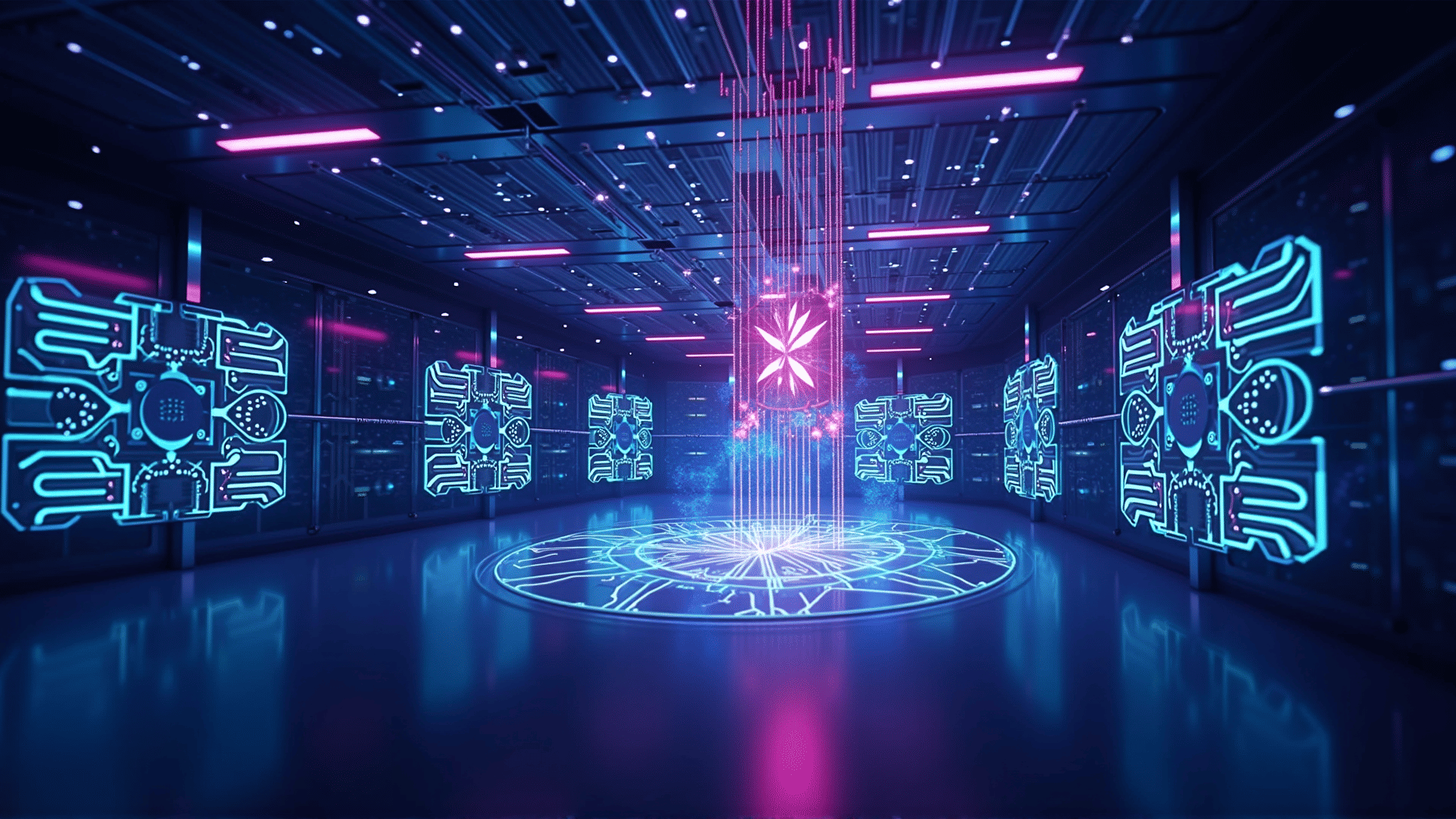
Quantum computing is a revolutionary field that has captured the imagination of scientists, technologists, and futurists alike. At its core, quantum computing leverages the principles of quantum mechanics to perform computations that are far more complex and powerful than those possible with classical computers. This technology holds the promise of transforming various aspects of our lives, from cryptography and drug discovery to financial modeling and artificial intelligence.
Basic Principles of Quantum Computing
To understand quantum computing, it is essential to grasp two key principles of quantum mechanics: superposition and entanglement. In classical computing, information is stored in bits that exist in one of two states, 0 or 1. However, quantum computing uses quantum bits, or qubits, which can be in a state of 0, 1, or any quantum superposition of these states. This property allows a quantum computer to process a vast amount of information simultaneously.
Entanglement is another fundamental concept where qubits become interconnected in such a way that the state of one qubit can depend on the state of another, regardless of the distance separating them. This phenomenon enables qubits to work together in ways that classical bits cannot, granting quantum computers a distinct advantage in specific computational tasks.
Advancements in Quantum Computing
In recent years, there have been significant strides in quantum computing research. Companies like IBM, Google, and Rigetti, alongside research institutions and startups, are at the forefront of developing quantum hardware and algorithms. Quantum computers have moved from theoretical models to real, functional devices, albeit still primarily in experimental phases.
For instance, in 2019, Google's quantum computer, Sycamore, reportedly performed a calculation in 200 seconds that would take the world's fastest supercomputer thousands of years. This milestone, known as "quantum supremacy," demonstrated the potential of quantum computers to solve certain problems significantly faster than classical computers can.
Potential Impact on Technology and Everyday Life
Quantum computing's impact on technology and everyday life could be transformative. One of the most discussed applications is in cryptography. Quantum computers have the potential to crack encryption algorithms that are currently considered secure, which could necessitate a complete overhaul of modern encryption techniques to protect sensitive data.
In healthcare, quantum computing could revolutionize drug discovery by simulating molecular interactions at an unprecedented scale and speed, thus accelerating the development of new pharmaceuticals. In finance, quantum algorithms could optimize trading strategies, manage risk better, and even reshape economic models.
Artificial intelligence also stands to benefit immensely. Quantum computers could enhance machine learning algorithms, resulting in more accurate models and faster processing times. This improvement could lead to advanced AI systems capable of tackling current limitations in data analysis, pattern recognition, and prediction.
Challenges and Future Prospects
Despite the exciting potential, quantum computing faces significant challenges. One of the biggest hurdles is qubit stability. Qubits are prone to errors from noise and other environmental factors, which can corrupt calculations. Developing error-correction methods and improving qubit coherence times remain critical areas of research.
Scalability is another concern. Building quantum computers that can operate with a large number of qubits reliably is a daunting engineering challenge. Additionally, developing software and algorithms tailored for quantum hardware is still in its infancy.
Despite these challenges, the progress in quantum computing continues to accelerate. As researchers overcome current obstacles, the field could usher in an era of unprecedented computational power, unlocking solutions to some of the most complex problems faced today.
In summary, quantum computing is poised to redefine the boundaries of what is computationally possible. As we continue to explore and harness its potential, it is likely to drive innovation across industries, changing the way we live and work.